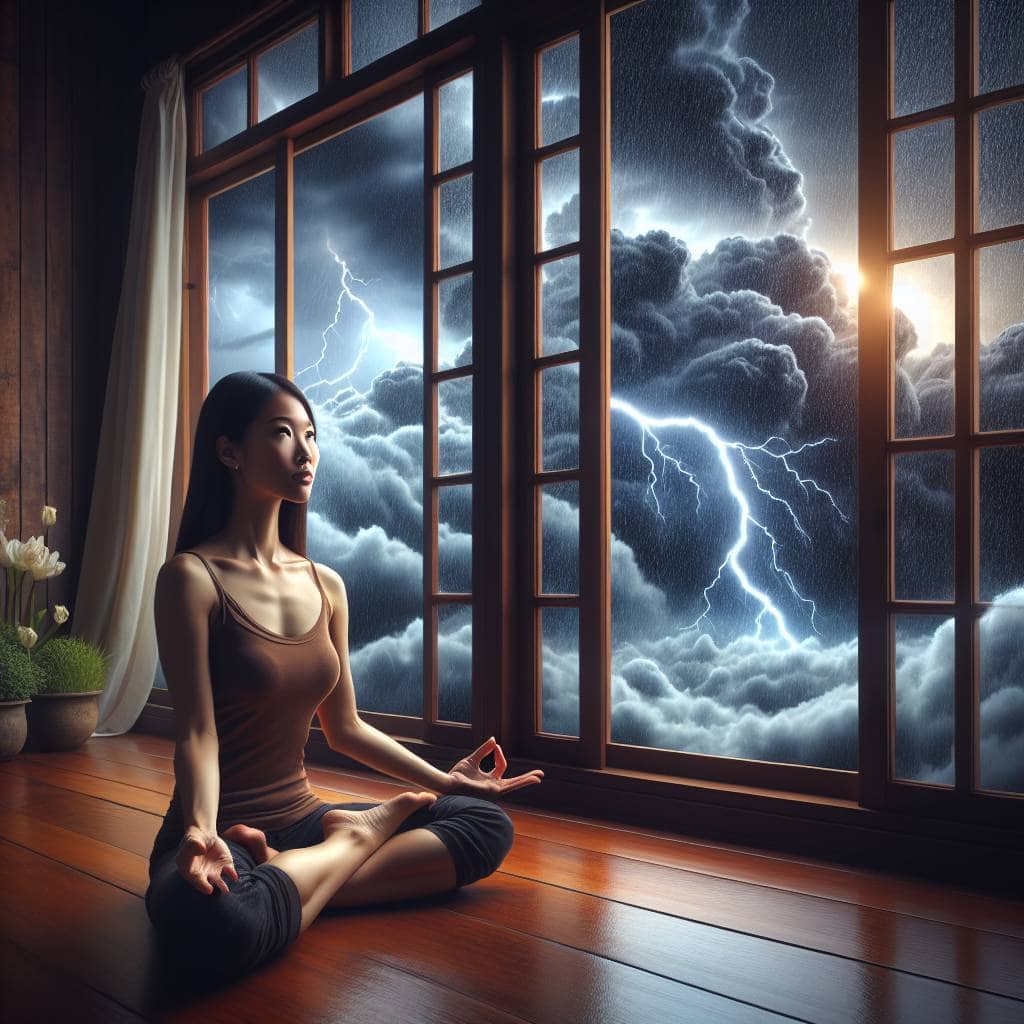
I once tried to meditate in the middle of a thunderstorm. Not the smart, peaceful kind of meditation you see in serene Instagram posts, but the real, gritting-your-teeth kind. There I was, cross-legged on my creaky living room floor, pretending the world wasn’t crashing down around me—literally and figuratively. I had read somewhere that mindfulness could help me sort through the tangled mess of my emotions. But all I could focus on was the relentless drumbeat of rain against the windows and the nagging thought that maybe, just maybe, I was more of a storm myself than the calm in its eye.
So, what’s the point of mindfulness if it feels like you’re just playing a game of emotional hide-and-seek? In this article, we’ll sift through the chaos together and find meaning beneath the noise. I’ll share the raw, unvarnished truth about observing our feelings without judgment, the infamous RAIN method, and the art of self-compassion. Spoiler: it’s not about silencing the storm but learning to dance in the downpour. Let’s dive deep and discover how these moments of mindful reflection can become seeds of solace, even when the world outside—and inside—feels anything but gentle.
Table of Contents
- Dancing in the Rain of Emotions: Observing Without Drowning
- The Art of Non-Judgment: When You’re Your Own Worst Critic
- Self-Compassion in the Storm: How to Be Your Own Umbrella
- Mindfulness: Navigating the Emotional Storm with a Farmer’s Heart
- Finding Stillness in the Eye of Emotional Storms
- Embracing the Storm Within
- Untangling the Knots of Emotion with Mindfulness
- When the Storm Becomes a Gentle Rain
Dancing in the Rain of Emotions: Observing Without Drowning

Emotions are like the unpredictable weather patterns of our inner world, each one a raindrop in a storm that can either nourish or drown us. And here we are, trying to dance in this downpour without slipping into the flood. It’s tempting to bolt for cover, to hide under the nearest overhang until the skies clear up. But what if we stood there, right in the thick of it, umbrella tucked away, feeling each drop on our skin? Observing emotions without judgment is like watching the rain from the porch, noticing the way it clings to the leaves, the sound it makes on the tin roof, without running for the sandbags. It’s about letting each feeling pass through you, acknowledging its presence without letting it sweep you away.
Mindfulness becomes your dance partner, guiding you through this rain-soaked rhythm with grace and patience. It’s about stepping back and witnessing these torrents of emotion with the gentle curiosity of a child watching ants march along a dirt path. You don’t have to label what you feel as good or bad, nor do you need to wage war against what bubbles up inside you. This isn’t a battle; it’s a waltz. And through this dance, self-compassion becomes the music that keeps you moving. It’s the gentle hum that reminds you it’s okay to falter, to misstep, to feel. You’re not drowning because you’re not fighting the current. Instead, you’re learning to float, to trust that the storm will pass, and in its wake, you’ll find a clearer sky, a new understanding, and perhaps a little more peace in the storm’s aftermath.
Sometimes, when you’re knee-deep in the muck of your own mind, trying to untangle the mess of emotions that seem to have no end, you need a momentary escape—something that feels different, even if just for a little while. It’s in these moments that mindfulness can serve as a bridge, not just to clarity, but to unexpected joys. Picture this: you’re in the heart of Montpellier, a city that hums with a vibrancy all its own, and you find solace in a connection that’s both novel and grounding. Engaging in a conversation with someone who sees the world through a different lens can offer a refreshing perspective, like chatting with a trans escort montpellier, where the exchange becomes a dance of words and laughter, reminding you of the beauty in life’s unpredictability. It’s these connections that, much like mindfulness, remind us that we’re not alone in our struggles, and sometimes, a little fun and companionship can be the best balm for a weary soul.
The Art of Non-Judgment: When You’re Your Own Worst Critic
I once stood in the middle of an old field, the kind where the earth seems to whisper secrets, and I felt the weight of my own judgments pressing down like a storm cloud. It’s easy to become your own harshest critic, to let the din of self-doubt drown out the gentle rustle of the world around you. But there, amidst the golden stalks, I realized something. It’s an art, this non-judgment. Not the kind you hang on a wall but the kind you nurture in the quiet corners of your heart. You learn to hold your flaws like fragile wildflowers, not weeds to be plucked and discarded. You stand in your own rain, drenched but unbowed, finding that grace comes not from perfection but from acceptance.
I remember a time when I let my inner critic run riot, each thought a sharp pebble underfoot. Yet, there’s beauty in the stumble, in the moment you pause to gaze at a weathered scarecrow, arms wide open to the sky, as if in surrender. It’s in that surrender we find freedom. When you stop measuring yourself against the impossible, you begin to see the world in vivid hues rather than stark black and white. The art of non-judgment is a dance, a delicate balance of acknowledging your humanity and choosing kindness over critique. It’s in these moments, when you’re willing to be both the dancer and the rain, that you truly learn to live.
Self-Compassion in the Storm: How to Be Your Own Umbrella
I remember a day, not unlike any other, when the sky turned a shade of gray that seemed to leech the color from everything. It was the kind of storm where raindrops felt like tiny needles rather than gentle kisses from the sky. I stood there, in my own tempest, feeling every ounce of doubt and fear swirling around me like an angry wind. But then, a thought pierced through the chaos—a reminder that the fiercest storms are often weathered not by the strength of our outer defenses, but by the resilience of our inner warmth. Self-compassion, I realized, is the umbrella we hold up against the deluge, not to keep us dry, but to remind us that we can stand there, soaked to the bone, and still find a way back home.
Being your own umbrella is about embracing the storm’s fury, not pretending it isn’t there. It’s whispering to yourself, “It’s okay to falter,” amidst the thunderclap of self-doubt. It’s about finding shelter in the small things—like the comforting aroma of coffee brewing in the kitchen or the soft hum of a favorite tune playing in the background. These aren’t grand gestures, but they’re enough to anchor you. Enough to remind you that you’re not just weathering the storm; you’re learning to dance in it. So, when the next storm rolls in, and it will, remember that being kind to yourself is not a luxury—it’s a lifeline.
Mindfulness: Navigating the Emotional Storm with a Farmer’s Heart
- Observe your emotions like you’d watch a summer storm roll across the plains—intense yet fleeting, a spectacle of nature not to be tamed.
- Feel every droplet of emotion as if it were rain nourishing the roots of your soul, acknowledging its presence but not drowning in its waters.
- Practice non-judgment by letting your emotions pass through like whispers in the cornfields, where no one accuses the wind of blowing too hard or too soft.
- Use the RAIN method as a gentle guide: Recognize the emotion, Allow it to be, Investigate with curiosity, and Nurture yourself with the kindness of a warm hearth on a cold night.
- Cultivate self-compassion, tending to your emotional garden with the same care you’d give to a struggling plant, knowing that every season brings its own challenges and growth.
Finding Stillness in the Eye of Emotional Storms
Observe like a weathered scarecrow in a field of emotions—silent, present, and unwavering. Let the whirlwind of feelings whip around you, but never let it uproot you.
Feel the raw edges of your emotions without judgment, like running your fingers over the grooves of a well-worn wooden table. Each groove tells a story, and it’s okay if those stories aren’t wrapped in neat little bows.
The RAIN method isn’t about dodging raindrops; it’s about dancing in the downpour. Recognize your emotions, Allow them to be, Investigate their roots, and Nurture yourself with the self-compassion you often reserve for others.
Embracing the Storm Within
Mindfulness is watching the rain of emotions pour down, not with an umbrella of judgment, but with an open heart ready to dance.
Untangling the Knots of Emotion with Mindfulness
How can observing my feelings help when they feel overwhelming?
Think of it like watching a storm from the safety of your porch. You’re in the thick of it, but not swept away. Observing is about allowing yourself to see the chaos without being the chaos—a tricky dance that can reveal the patterns in the pandemonium.
What is the RAIN method, and how does it work?
RAIN is a lifeline thrown in the turbulent sea of emotions. Recognize what you’re feeling, Allow it to be there, Investigate with curiosity, and Nurture yourself with kindness. It’s like letting a wild animal approach, giving it space, understanding its nature, and finally, offering it a gentle hand.
Why is self-compassion important in mindfulness?
Because berating yourself is like trying to soothe a burn with a branding iron. Self-compassion wraps you in a warm, forgiving embrace, reminding you that it’s okay to be human, messy, and imperfect. It’s the balm for the soul’s chafed edges.
When the Storm Becomes a Gentle Rain
In this dance of observing, I’ve come to realize that self-compassion isn’t just a gentle pat on the shoulder—it’s the very foundation of standing upright amidst the storm. It’s like looking at the rain, feeling each drop on your skin, and knowing that every emotion, every gust of wind, is simply a part of the landscape. There’s beauty in this acceptance, in watching the clouds roll by without demanding sunshine. My journey with mindfulness taught me to witness without judgment, to let the emotions ripple through like echoes in a vast, empty barn.
And so, here I am, embracing the rain as it falls, no longer afraid of getting wet. It’s a dance, really—a slow, deliberate waltz with my own heart. Some days, the rhythm is off, and my feet stumble on the uneven ground. But in those moments, I remind myself that even the most seasoned dancers trip now and then. It’s not about perfect steps; it’s about feeling the music, allowing the raindrops to guide my movements, and knowing, in the core of me, that this dance is mine alone to master.