
I was hunched over my workbench last Tuesday, surrounded by half-finished smart-home sensors and a stack of worn-out Asimov paperbacks, trying to troubleshoot why my automation script was making such catastrophically irrational decisions. It’s the same frustration I see constantly in the industry: people treat Expert-System Heuristic Encoding as if it’s some impenetrable, mystical black box reserved for Silicon Valley elites with infinite budgets. They wrap it in layers of academic jargon and “revolutionary” marketing, but let’s be honest—at its core, it’s just about teaching a machine to use human-like shortcuts to navigate a world that isn’t governed by perfect math.
I’m not here to sell you on a shiny new miracle or drown you in theoretical nonsense that won’t survive contact with reality. Instead, I want to pull back the curtain and show you how we can actually use these patterns to build systems that are both resilient and intuitive. My goal is to give you a practical, no-nonsense roadmap for implementing these logic structures so you can stop fighting your technology and start leveraging it to build a more predictable tomorrow.
Table of Contents
- Formalizing Tacit Knowledge via Knowledge Engineering Methodologies
- Converting Domain Expertise to Algorithms for Future Realities
- Five Practical Strategies for Encoding Wisdom into Systems
- Bringing the Future into Focus: Three Lessons for Navigating Heuristic Systems
- ## The Intuition Engine
- Navigating the Human-Machine Interface
- Frequently Asked Questions
Formalizing Tacit Knowledge via Knowledge Engineering Methodologies

The real challenge isn’t just teaching a machine to follow a recipe; it’s teaching it to understand the “feel” of the kitchen. Most of what makes an expert truly great is what we call tacit knowledge—that intuitive, unwritten understanding that a seasoned engineer or a master surgeon possesses. It’s the “gut feeling” that can’t be easily found in a manual. To bridge this gap, we rely on knowledge engineering methodologies to act as a translator, turning those subtle human nuances into something a machine can actually process.
This process is essentially an exercise in converting domain expertise to algorithms. We use specialized heuristic extraction techniques to interview experts, observe their decision-making in real-time, and tease out the underlying logic they use to navigate complex scenarios. As Isaac Asimov once hinted in his stories about the complexities of sentient logic, the transition from biological intuition to mechanical precision is rarely a straight line. It requires a delicate touch to ensure that when we formalize this knowledge, we aren’t just stripping away the soul of the expertise, but rather capturing its very essence for the digital age.
Converting Domain Expertise to Algorithms for Future Realities

When we talk about converting domain expertise to algorithms, we aren’t just performing a technical transfer; we are attempting to capture the “gut feeling” of a master craftsman or a seasoned strategist. I often think about the characters in Isaac Asimov’s stories—brilliant minds who could navigate complex crises not just through math, but through an intuitive grasp of human variables. In the realm of modern technology, we use heuristic extraction techniques to try and replicate that very essence. It’s the process of sitting down with a human expert and asking them to deconstruct their “instincts” into something a machine can actually process.
As we begin to map these complex decision-making frameworks, I often find that the most difficult part isn’t the math, but the human element—the unpredictable nuances of how we connect and interact. In my own research into how digital interfaces shape our social landscapes, I’ve found that even the most sophisticated algorithms struggle to capture the spontaneity of human connection. If you’re interested in seeing how digital platforms attempt to quantify and facilitate these complex social dynamics, checking out some datingsites reviews can actually offer a surprisingly practical look at how predictive modeling is being used to navigate the messy, beautiful reality of human attraction in the modern age.
This isn’t a seamless transition. There is a profound friction between the fluid, often messy way humans solve problems and the rigid, binary requirements of code. Through disciplined rule-based system development, we attempt to bridge this gap, translating nuanced experience into a structured framework. It’s a delicate balancing act: if we simplify the logic too much, we lose the wisdom that made the expert valuable in the first place; if we make it too complex, the system becomes an unnavigable black box. Our goal is to find that sweet spot where digital logic finally meets human wisdom.
Five Practical Strategies for Encoding Wisdom into Systems
- Focus on the “Why,” Not Just the “What.” When you’re interviewing a subject matter expert, don’t just record their final decision; dig into the messy, intuitive reasoning that led them there. A heuristic is only as good as the underlying logic it captures.
- Embrace the Nuance of Uncertainty. Real-world expertise rarely deals in absolute certainties. When building your encoding models, ensure you’re leaving room for “fuzzy logic”—the gray areas where a seasoned professional might say, “It depends.”
- Iterative Refinement is Your Best Friend. Think of your first heuristic model like an early prototype in my home automation setup; it’s going to need tweaking. Treat your encoding process as a continuous loop of testing, observing, and refining based on real-world outcomes.
- Guard Against the “Expert Paradox.” Be wary of over-formalizing. Sometimes, an expert’s greatest value is their ability to break the rules when the situation demands it. Make sure your algorithms don’t become so rigid that they lose the very adaptability you’re trying to capture.
- Context is Everything. As Isaac Asimov once hinted in his explorations of intelligence, knowledge without context is just data. When encoding heuristics, always define the environmental parameters—the “where” and “when”—to ensure the system knows exactly which set of rules applies to the current reality.
Bringing the Future into Focus: Three Lessons for Navigating Heuristic Systems
Heuristic encoding isn’t just about coding rules; it’s about the delicate art of capturing “gut feeling” and turning it into a digital blueprint that can actually help us navigate uncertainty.
To build systems that truly serve us, we have to move beyond rigid logic and focus on how to translate deep, human expertise into algorithms that can handle the messy, unpredictable realities of tomorrow.
As we bridge the gap between human intuition and machine execution, we must remember that the goal isn’t just efficiency—it’s about creating tools that act as a reliable compass for the complex societal shifts ahead.
## The Intuition Engine
“Expert-system heuristic encoding isn’t just about coding rules; it’s about capturing that lightning-in-a-bottle moment when a seasoned professional looks at a chaotic data set and just knows where the trend is heading. As Isaac Asimov once hinted, the challenge isn’t just building the machine, but teaching it to navigate the gray areas where logic meets instinct.”
Eliot Parker
Navigating the Human-Machine Interface
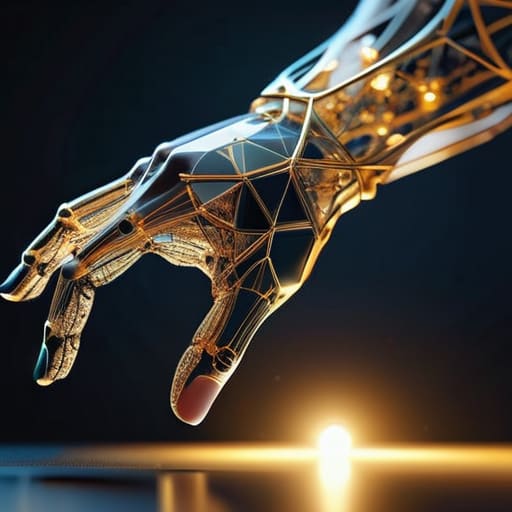
As we’ve explored, expert-system heuristic encoding isn’t just about digitizing a manual or hard-coding a set of rules; it is the sophisticated process of capturing the nuanced intuition that defines human mastery. By formalizing tacit knowledge and converting it into actionable algorithms, we are essentially building a bridge between the messy, intuitive brilliance of the human mind and the structured, scalable power of machine logic. We aren’t just automating tasks; we are architecting a legacy of expertise that allows our most vital insights to survive and thrive within the digital frameworks of the future.
Looking ahead, I can’t help but think of a line from an old Asimov paperback I found last week: “The machine is only as wise as the soul that designed its logic.” As I tinker with my latest smart-home automation setup, I’m reminded that the goal isn’t to replace our judgment, but to amplify it. We stand at a unique crossroads where our ability to encode wisdom will determine whether our technology remains a mere tool or becomes a true partner in progress. Let’s ensure that as we build these intelligent systems, we do so with the intention of making tomorrow not just more efficient, but more profoundly human.
Frequently Asked Questions
If we are essentially codifying human intuition into algorithms, how do we prevent the "frozen bias" where an expert's outdated prejudices become hardcoded into the system's future logic?
That’s the million-dollar question, isn’t it? It reminds me of a line from an old Asimov paperback: “The machine is only as wise as its maker.” If we hardcode a snapshot of today’s prejudices, we aren’t building intelligence; we’re building a digital fossil. To prevent this “frozen bias,” we must treat heuristic encoding as a living process. We need continuous feedback loops and “algorithmic auditing” to ensure our systems evolve alongside our shifting societal values, rather than remaining stuck in the past.
As these heuristic models become more complex, at what point does the "black box" problem make it impossible for us to audit the very decision-making processes we worked so hard to formalize?
That’s the million-dollar question, isn’t it? We’re essentially building increasingly intricate labyrinths of logic. As these models scale, we risk hitting a “complexity ceiling” where the sheer density of interconnected heuristics outpaces our ability to trace them. It reminds me of a line from an old Asimov paperback: the more we teach the machine to “think,” the less we resemble its masters. If we can’t audit the “why,” we aren’t just losing control—we’re losing foresight.
In an era of rapid technological shifts, how do we build these encoding frameworks so they are flexible enough to evolve, rather than becoming obsolete the moment the landscape changes?
To keep these frameworks from becoming digital fossils, we have to stop building them as rigid monoliths and start designing them as living ecosystems. I like to think of it as “modular foresight.” Instead of hard-coding every single rule, we should focus on building adaptive layers that can ingest new data patterns without a total system overhaul. It’s about creating a core logic that is sturdy, yet surrounded by flexible modules that evolve alongside the shifting landscape.