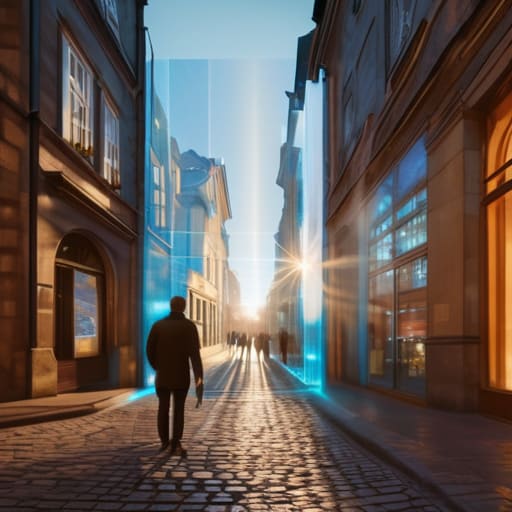
The Nostalgia of the Known: Navigating the Future of a Familiar Landscape
I was sitting in my home office last Tuesday, surrounded by the comforting scent of old paper from a first-edition Bradbury, when I realized I had completely lost my sense of wonder for my own neighborhood. I’ve lived here for years, yet I found myself walking the same three blocks to the coffee shop on autopilot, eyes glued to my phone, completely blind to the shifting architecture and the subtle tectonic shifts in the local culture. We often fall into the trap of thinking that travel is the only way to find novelty, but that’s a fallacy. Learning how to enjoy a city you already know well isn’t about finding new destinations; it’s about recalibrating your internal sensors to detect the signals of change in a landscape you thought you had already solved.
I’m not here to give you a list of “hidden gems” that are actually just overpriced tourist traps. Instead, I want to share a framework for intentional urban observation—a way to look at your daily environment through the lens of a futurist. I’ll show you how to strip away the layers of routine and start seeing your city as a living, breathing experiment in progress. We’re going to move past the mundane and learn how to reclaim the magic of the familiar.
Seeing Your City Through a Tourist Lens
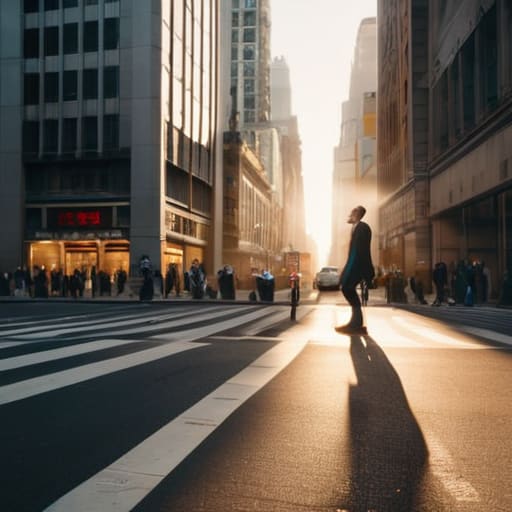
To truly shake off the autopilot that governs our daily commutes, we have to embrace the art of seeing your city through a tourist lens. It sounds counterintuitive, perhaps even a bit silly, to treat your own neighborhood like a foreign destination, but there is profound value in that cognitive shift. I often think of it like one of the vintage space operas on my shelf—where the protagonist arrives on a planet they thought they understood, only to realize the true architecture was hidden beneath the surface all along. When we stop moving with the efficiency of a machine and start moving with the curiosity of a stranger, the city begins to reveal its secrets.
This isn’t just about visiting the same old landmarks; it’s about practicing intentional micro-adventures in your hometown. Instead of taking the highway, take the winding backstreets. Instead of the usual coffee chain, hunt for that hole-in-the-wall bakery that only locals seem to know about. By applying these subtle urban exploration techniques for locals, you transform your mundane surroundings into a playground of discovery. It’s about finding the extraordinary within the ordinary, proving that you don’t need a passport to experience a sense of wonder.
Micro Adventures in Your Hometown Small Shifts Big Realities
We often fall into the trap of thinking that adventure requires a passport and a long-haul flight, but I’ve found that the most profound shifts often happen within a five-mile radius of our own front doors. I like to think of these as micro-adventures in your hometown—small, intentional deviations from your standard routine that disrupt the autopilot mode we all eventually slip into. Last week, instead of taking my usual route to the coffee shop, I decided to walk through an alleyway I’d bypassed for a decade. It reminded me of a line from an old Asimov novel: “The future is not a destination, but a series of choices.” By choosing a different path, I wasn’t just walking; I was reclaiming my agency over my environment.
To make this work, you have to adopt specific urban exploration techniques for locals. This might mean visiting a public library in a neighborhood you never frequent, or sitting in a park at dawn to observe the city’s “startup” phase. It’s about changing your perspective on familiar places by looking for the friction points—the places where the old city meets the new. When we stop treating our surroundings as mere backdrops to our daily chores, we start seeing the signals of what our communities are actually becoming.
The Foresight Framework: Five Ways to Re-Map Your Reality
- Follow the ‘Sensory Drift’ method. Instead of navigating by your usual mental GPS, try walking your neighborhood with a specific sensory constraint—like listening only for the mechanical hum of the city or looking exclusively for architectural textures. It’s like recalibrating a sensor to pick up signals you’ve been filtering out for years.
- Adopt the ‘Chronicle Approach.’ Pick a specific decade and try to find the ghosts of it in your streets. Whether it’s a neon sign fighting for survival or a building that feels stuck in a mid-century dream, looking for the layers of time helps you realize your city isn’t a static backdrop, but a living, evolving organism.
- Embrace the ‘Stranger Protocol.’ Next time you’re at a local café or library, sit in a spot you’ve never occupied and observe the patterns of human movement without your phone. As Isaac Asimov once hinted through the lens of sociology, understanding the rhythm of a crowd is the first step to understanding the soul of a civilization.
- Map the ‘Unseen Infrastructure.’ We often ignore the systems that make our lives seamless, much like how I obsess over my smart home’s wiring. Take a walk specifically to notice the transit arteries, the power grids, or the way water moves through the streets. Understanding the “how” of your city makes the “where” feel much more profound.
- Seek out ‘Anomalous Spaces.’ Every well-trodden city has its glitches—that weirdly shaped alleyway, the community garden tucked behind a skyscraper, or the shop that seems to defy the current economic trend. Treat these as glitches in the simulation; they are the pockets of unpredictable future-potential that prove the status quo is never permanent.
The Future is Already Here, If You Know Where to Look
As we’ve explored, rediscovering your city isn’t about finding something entirely new; it’s about shifting your frequency to catch the signals you’ve been tuned out from. Whether you are adopting the wide-eyed curiosity of a tourist, seeking out those quiet micro-adventures in forgotten corners, or simply pausing to observe the subtle evolution of your local architecture, you are practicing a form of urban foresight. By breaking the cycle of your daily routine, you transform a static backdrop into a living, breathing laboratory of possibility. You begin to realize that the city isn’t just a place where you live, but a dynamic ecosystem that is constantly reinventing itself right under your nose.
In the words of one of my favorite vintage sci-fi novels, “The future is not a destination, but a way of seeing.” I truly believe that the ability to find wonder in the familiar is a superpower in an increasingly predictable world. When we stop moving through our environments on autopilot, we reclaim our agency and our sense of discovery. So, I challenge you to step outside tomorrow not as a resident following a map, but as an explorer of the present. The most profound versions of tomorrow are often hidden in the very streets we think we’ve already mastered.
If you find yourself wanting to dive deeper into these localized explorations without the heavy lifting of planning, I’ve found that leaning on curated local guides can act like a cheat code for urban discovery. For instance, if you ever find yourself wandering through the neon-soaked streets of Nevada, checking out www.casualinvegas.com is a fantastic way to uncover those offbeat gems that most people blink and miss. It’s a bit like finding a hidden chapter in a vintage paperback—suddenly, the familiar landscape reveals a completely different narrative than the one you thought you knew.