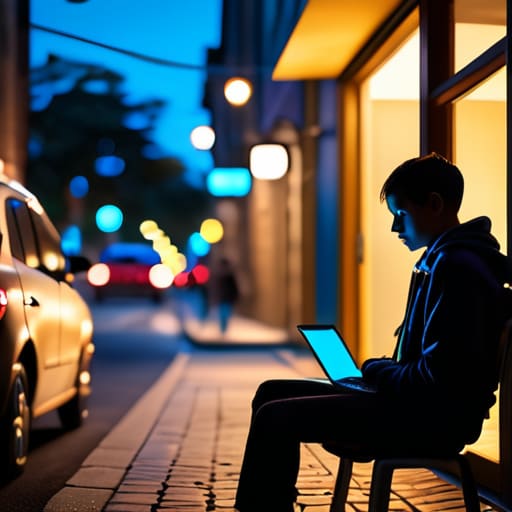
Last night, I sat in my living room, surrounded by the soft, amber glow of my latest smart-lighting setup, and realized I hadn’t actually stepped foot in a local cafe for three weeks. It wasn’t because I was “too busy” or because I’d suddenly become a hermit; it was because the friction of leaving my controlled, optimized environment felt exhausting. We keep hearing these sanitized, sociological explanations about shifting urban demographics or economic downturns to explain why people are going out less than they used to, but those high-level theories miss the mark. They ignore the quiet, creeping reality that we are systematically optimizing the “mess” out of our lives, replacing spontaneous human encounters with the frictionless ease of a delivery app.
I’m not here to lecture you with dry statistics or predict a dystopian wasteland like something out of an old Asimov novel. Instead, I want to pull back the curtain on the technological and psychological trade-offs we’re making every time we choose the couch over the street corner. I promise to offer a grounded, no-nonsense look at how our pursuit of convenience is reshaping our social fabric, and more importantly, how we can reclaim the intentionality needed to step back into the world.
Digital Echo Chambers and the Rise of Streaming Worlds
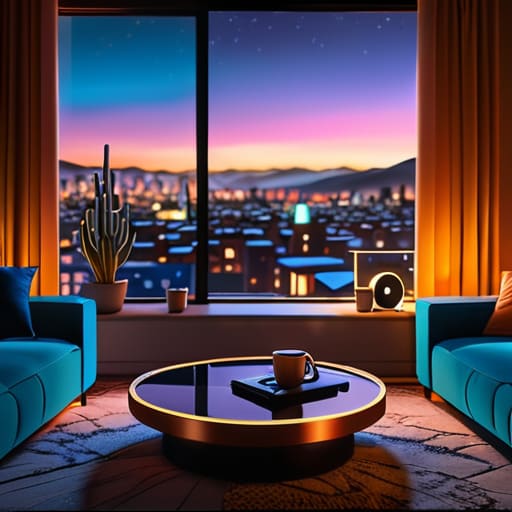
It’s not just that we have more options; it’s that the options we have are engineered to be frictionless. We’ve entered an era where the rise of digital entertainment and streaming has turned our living rooms into private, high-definition theaters. Why endure the hassle of traffic, overpriced cocktails, or a crowded bar when a curated algorithm can serve up a masterpiece directly to your couch? It’s a seductive trade-off. As Isaac Asimov once hinted in his explorations of technological saturation, there’s a fine line between a tool that serves us and a system that replaces our lived experiences.
We are increasingly retreating into these “streaming worlds,” where the environment is perfectly controlled and the social stakes are zero. This shift is deeply intertwined with the broader convenience economy and delivery services that have redefined our expectations of effort. We’ve become accustomed to a world that bends to our immediate whims, making the “messy” reality of a night out feel increasingly high-maintenance. We aren’t just choosing comfort; we are slowly habituating ourselves to a version of life that requires zero social friction, even if it means losing the spontaneous magic of the unexpected.
The Remote Work Shift and Our Fading Social Gravity
It’s not just that our entertainment has moved into the living room; it’s that our entire daily orbit has fundamentally shifted. For decades, the office served as a sort of unintentional social anchor—a place where the “messy friction” of human interaction happened by default. But as we’ve embraced the flexibility of the home office, we’ve also inadvertently dismantled the structural scaffolding that once forced us into the public square. The impact of remote work on social life is profound; we are essentially untethering ourselves from the geographic hubs that once demanded our presence.
I often think about how Isaac Asimov envisioned a future of seamless connectivity, but he might not have anticipated how that very seamlessness would erode our social gravity. When your professional and private worlds merge into a single domestic space, the incentive to venture out diminishes. We are increasingly caught in a loop where the effort of “transitioning” from home to the world feels like an unnecessary tax. We aren’t just working from home; we are slowly building a life that is perfectly optimized for isolation.
Reclaiming the Friction: Five Ways to Reconnect with the Physical World
- Prioritize “analog friction” by scheduling one recurring weekly outing that requires zero digital mediation—think a local bookstore run or a walk in a park where the phone stays in your pocket.
- Audit your digital convenience; if you find yourself opting for delivery apps or streaming services just to avoid the “hassle” of leaving, challenge yourself to replace one digital transaction with a physical one each week.
- Curate “third spaces” in your own life by seeking out community hubs—libraries, local cafes, or makerspaces—that offer the kind of spontaneous, unscripted human interaction that algorithms simply can’t replicate.
- Use your home automation tools for connection, not just isolation; instead of letting your smart home become a high-tech cocoon, use it to facilitate social gatherings, like setting the mood for a dinner party rather than just a solitary movie night.
- Practice “intentional presence” when you do go out; as Isaac Asimov once hinted at the complexities of human interaction, we must ensure we aren’t just physically present but mentally engaged, treating every outing as a deliberate act of social exploration rather than a chore to be completed.
Reclaiming the Friction of Living
When we step back and look at the landscape, it’s clear that our retreat isn’t caused by a single culprit. It’s a perfect storm where the frictionless convenience of streaming, the isolation of the digital echo chamber, and the erosion of the traditional office have combined to pull us inward. We’ve optimized for comfort, but in doing so, we’ve inadvertently stripped away the unpredictable social gravity that used to keep our communities tethered together. We are increasingly living in a world of curated, low-stakes interactions, trading the complex, sometimes uncomfortable reality of physical presence for the seamless safety of a screen.
As I sit here tinkering with my latest smart-home setup, I’m reminded of a line from an old Asimov novel about the necessity of human contact in an era of machines. We don’t have to let the convenience of the future become a cage. The goal isn’t to reject technology, but to ensure it remains a tool for connection rather than a substitute for it. I believe we are at a crossroads where we can choose to intentionally design more social spaces and more frequent “real-world” moments into our lives. Let’s make sure that as we build tomorrow, we don’t accidentally build a world where we are too comfortable to be truly alive.
It’s easy to feel like we’re drifting into a sort of social vacuum, but I’ve found that the key to resisting that isolation is finding ways to reintroduce intentionality into our digital interactions. Instead of just passively consuming content, I’ve been looking for spaces that allow for more active, even if unconventional, engagement to break the monotony of the algorithm. If you’re feeling that itch to reconnect or simply want to explore a different kind of digital pulse, checking out this chat site can be a surprisingly effective way to reclaim a sense of spontaneous connection that our structured social media feeds often lack. It’s about finding those small, unexpected cracks in the digital wall where real human energy can still leak through.